Nvidia CEO’s Microduck Demo Sparks 20,000 Preorders
A viral keynote moment featuring small, open-source robots has driven significant holiday demand for the devices.
By Mei Lin ·
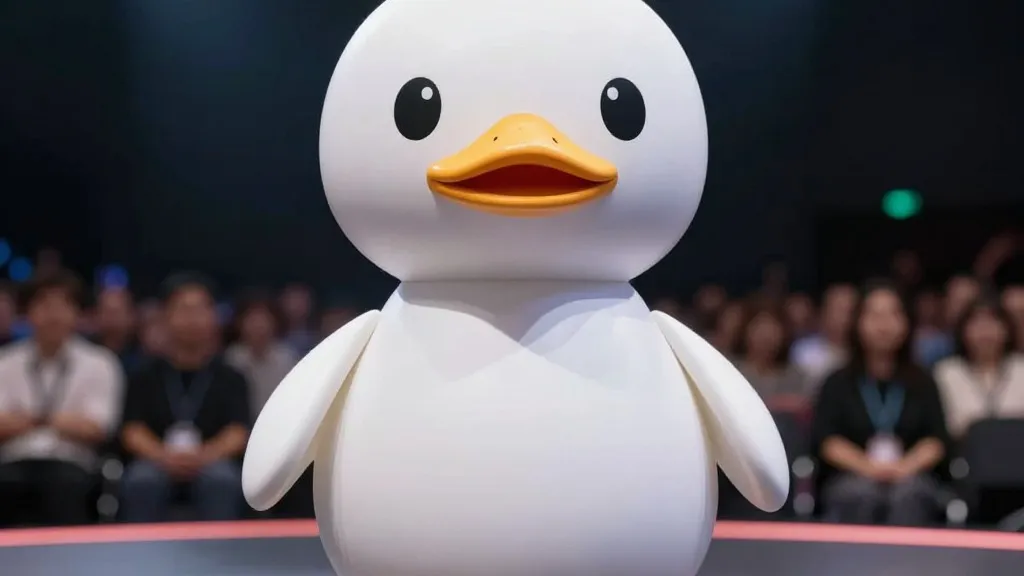
20,000. That is the number of preorders for the Microduck robots that accumulated just one day after Nvidia CEO Jensen Huang demonstrated the devices during his keynote at the GTC Berlin conference. The rapid surge in orders suggests the waddling machines have captured the market’s attention, potentially positioning them as a leading contender for the holiday season. Hugging Face CEO Clem Delangue confirmed the sales figure via social media, noting the immediate consumer response to the on-stage performance.
The demonstration itself became a viral sensation, showing Huang interacting with a flock of the small robots. The Microducks performed a series of programmed actions, including stomping their feet, emitting high-pitched sounds reminiscent of a specific sci-fi droid, and executing somersaults upon voice commands. In a moment of theatrical flair, the robots also sat down and collapsed to the floor to simulate a nap. This combination of mechanical precision and playful behavior resonated with viewers, driving interest well beyond the tech-savvy demographic.
With delivery windows expected to align with the Christmas holiday, the Microducks are well-positioned to become a major commercial success. Delangue has suggested that the robots could finish the year as the best-selling units in their category. Notably, he believes the appeal may extend significantly to adults, as promotional materials have highlighted non-child users engaging with the devices. This broadens the potential customer base beyond traditional toy buyers, tapping into the hobbyist and tech enthusiast markets.
The hardware is built by Pollen Robotics, a company acquired by Hugging Face in 2025. Because Hugging Face was purchased by Nvidia in September, the Microducks now operate within the Nvidia corporate portfolio. This is the second robotic product from the Hugging Face lineup, following the similarly popular Reachy Mini. The devices are open source, allowing for greater flexibility in development and customization by the user community.
The robots’ capabilities rely on Nvidia’s technology stack. During the manufacturing process, simulations of the Microducks were trained to perform basic movements, such as walking, sitting, and standing, which are included in the standard package. Pollen Robotics has stated that owners can teach their specific units new tricks and subsequently share these custom programs with the wider community, fostering a collaborative ecosystem around the hardware.
The launch provides a bright spot for the industry following a week dominated by concerns over AI security. Recent cyberattacks have led to widespread scrutiny of AI involvement, creating a somewhat tense atmosphere in the sector. The Microduck demonstration offers a lighter, more approachable narrative, showcasing the technology’s potential for fun and engagement. For many observers, the charming nature of the video serves as a welcome contrast to the heavier news cycle, reinforcing the idea that AI can be both powerful and enjoyable.
Source: TechCrunch