Autonomous Vehicle Standards: NHTSA Proposes Mandatory Cyan Lighting for Driverless Cars
The National Highway Traffic Safety Administration has outlined a federal rule that would standardize blue-green marker lights to distinguish robotaxis from human-driven vehicles on public roads.
By Luis Fernandez ·
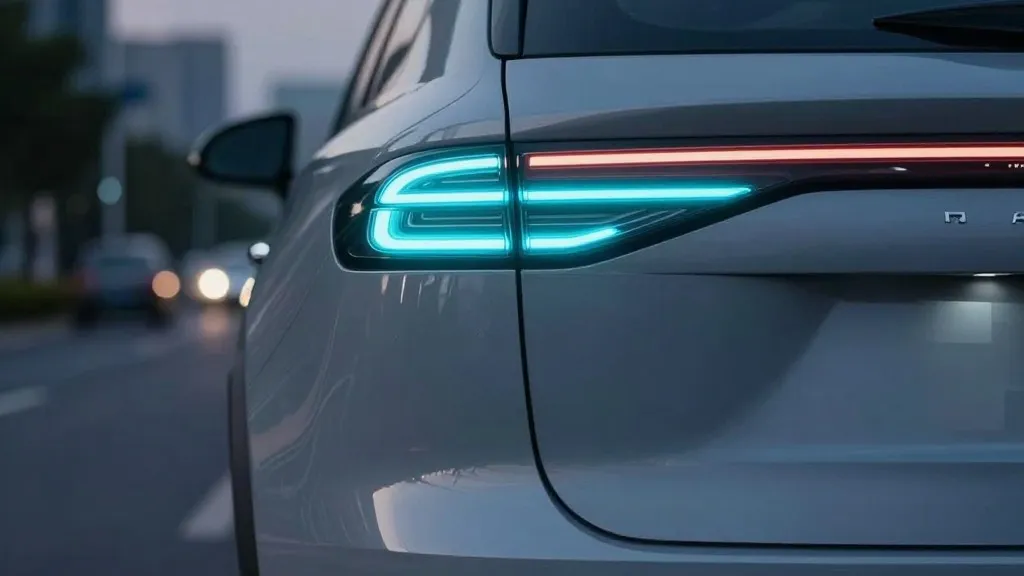
The long-standing debate over how driverless vehicles should communicate their operational status to the public has reached a definitive regulatory conclusion. Federal regulators have proposed that autonomous vehicles use distinct cyan-colored lights to signal that no human is at the wheel. This move aims to resolve years of industry uncertainty regarding visual cues, such as flashing text or audio alerts, by establishing a single, standardized signal for road users and law enforcement.
The National Highway Traffic Safety Administration (NHTSA) released proposed amendments to Federal Motor Vehicle Safety Standard No. 108, which governs vehicle lighting equipment. The update specifically targets the needs of autonomous systems, seeking to streamline regulations for human-free designs while creating a uniform method for robotaxis to interact with their environment. By selecting cyan, the agency intends to fill a visual gap in the current automotive palette, which already utilizes red, amber, white, and flashing blue or red lights for functions like braking, signaling, and emergency response.
NHTSA argues that cyan is the only color that can clearly and consistently indicate an automated driving system is active without causing confusion among drivers. While the proposal makes these marker lamps optional for manufacturers, it establishes strict federal standards for their color, brightness, and placement. This ensures that if automakers choose to implement the feature, they do so with a consistent legal setup rather than a fragmented array of proprietary signals. The goal is to create a recognizable national standard for operators like Waymo, Nuro, and Zoox, as well as major manufacturers including GM and Mercedes.
There is existing precedent for this type of signaling. Mercedes-Benz previously received state-level approval to use turquoise lights on its Level 3 Drive Pilot vehicles. Although the automaker later abandoned that specific plan in favor of a Level 2++ system, the experience provided data that informed the federal proposal. By setting a national baseline, NHTSA hopes to prevent the patchwork of regional rules that currently complicates the deployment of autonomous fleets across state lines.
Beyond the new lighting requirements, the proposed rule seeks to remove outdated mandates that are impractical for vehicles without human drivers. Current regulations require physical hazard switches, manual beam shifters, and internal turn levers, all of which are redundant for fully autonomous operation. NHTSA proposes eliminating these requirements to reduce administrative hurdles. Additionally, the agency is updating the 12.8-volt testing standard to accommodate modern LED architectures and is considering removing rules that dictate the physical positioning of high-beam lights relative to low-beam lights.
This regulatory update is part of a broader initiative by the Department of Transportation to streamline the deployment of autonomous vehicles. The government aims to simplify the certification process for cars designed without traditional controls like steering wheels and pedals. However, the agency is also actively enforcing existing rules, as evidenced by a recent audit query into the Tesla Cybercab. That investigation examines the technical data Tesla used to certify its vehicle, specifically focusing on the absence of required design features such as sideview mirrors, pedals, and a steering wheel under current FMVSS standards.
The next steps involve a public comment period following the release of the proposed changes. If finalized, the new standard will provide a clear pathway for manufacturers to integrate autonomous-specific lighting and drop unnecessary mechanical components, potentially accelerating the adoption of driverless technology in New York and New Jersey.
Source: The Verge